




















Yunnan travel works when you treat the province as two different trips. The highland loop — Dali, Lijiang, then maybe Shangri-La — is the one most first-timers should book. The tropical south around Jinghong is another climate, another kitchen, and another week. Mix them in six days and you spend the week in vans.
Quick Answer
Yunnan Travel: One Spine, Not a Wishlist
Chinese notes on Xiaohongshu keep repeating Erhai, Lijiang old town, Jade Dragon, Tiger Leaping Gorge, Shangri-La, Lugu Lake, Meili, and Xishuangbanna. Passport guests with English-only WeChat cannot run that list. Pick Dali → Lijiang, then add Shangri-La only if you have two spare nights.
Ready to turn the loop into dates and hotels? Open our Yunnan tour packages, or request a private plan with an English-speaking local guide.
What Yunnan is (it is not one city)
Yunnan sits on China’s southwest edge, against Myanmar, Laos, and Vietnam. Kunming is the air hub. Most places to visit in China lists flatten the province into “mountains and minorities.” On the ground you feel three layers:
- Dali — Bai towns, Erhai Lake, slower nights, easier altitude. Winter adds the classic blue hour you cannot get in other seasons.
- Lijiang — Naxi old town (a UNESCO site), Jade Dragon as a day mountain, easy to over-stay on the bar street.
- Shangri-La / gorge country — Tibetan plateau light, thinner air, Tiger Leaping if legs and weather allow.
Stay two nights in Dali before you sleep high. That single rule prevents half the “I felt awful in Shangri-La” trips we rebuild.
Winter Dali: Erhai’s classic blue hour
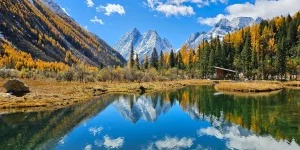
This tone is not a filter. Winter Dali puts Erhai in a deep navy, then lights the cafés gold. A thin orange line sits behind Cangshan. Spring and autumn are milder. They do not give you this blue. Summer haze and rain wash it out.
On a first Yunnan travel loop, stay two nights in Dali if you want this hour. Walk the promenade after sunset. Or take a short evening cruise. Do not treat Erhai as a drive-by on the way to Lijiang.
Classic winter blue hour on Erhai — only Dali in winter looks like this.





The route order that actually works
Xiaohongshu’s default first trip is Dali → Lijiang → Shangri-La, sometimes with Lugu Lake bolted on. For international guests we keep Lugu off a first week. Meili’s sunrise is a photography project, not a sidecar.
- Fly into Kunming or Dali. Do not “see Kunming in two hours” unless your flight forces it.
- Dali first (Erhai, Xizhou or a village stay, one slow market meal).
- Lijiang next. Sleep outside the loudest old-town lanes if you can. Yuhu Village is the quieter Naxi stop when you want photos without the bar street.
- Shangri-La only if you have two spare nights and no heart/lung issues.
- Xishuangbanna on a later trip, or a dedicated southern week.
If you want a packaged version of that spine, start with our Yunnan tour page, then we private-label the days.
A six-day Yunnan itinerary (first-timer)
Day 1 — Arrive Dali. Check in near Erhai or in the old town’s quieter side. Walk, do not collect temples. Dinner: clay-pot rice or a Bai sour-and-chili fish if spice is welcome.
Day 2 — Erhai without the circus. Cycle or e-bike a short lakeside section. Full-lake loops look good on maps and wreck knees. In winter, keep the last hour for blue hour on the promenade or a short cruise. That classic blue only happens in winter Dali.
Day 3 — Transfer to Lijiang. Keep the drive or train as the day’s work. Evening: one alley off the main water wheels, then stop. The old town after 21:00 is a different product.
Day 4 — Mountain or village, not both at full speed. Jade Dragon needs official tickets, weather, and a plan for the glacier park vs. a lower meadow. If clouds sit on the peak, switch to Yuhu or a Naxi courtyard.
Day 5 — Gorge or plateau, one only. Tiger Leaping Gorge is a hiking in China day, not a selfie stop at the railing. Shangri-La’s monastery needs a night, not a six-hour round trip from Lijiang.
Day 6 — Buffer + fly. Highland itineraries fail when the last morning is a 05:00 van to the airport. Need China high-speed train tickets into Kunming or Dali? We book those with the rest of the private tour.
Yunnan food: eat with the altitude, not against it
The highland kitchen is oil, chili, mushrooms, cheese, and crossing-the-bridge noodles. The Dai south is herbs, sticky rice, and grilled fish. Do not hunt for “the best Dai feast” in Shangri-La.
- Crossing-the-bridge noodles — Kunming / bigger towns. Broth stays hot; add the raw slices yourself.
- Rushan / goat cheese — Dali. Grilled, not only as a novelty dessert.
- Wild mushroom hotpot — mid-Yunnan, in season. Go with a driver who knows the shop.
- Clay-pot rice / rice noodles — everywhere. Safe when spice is separated.
- Yak or Tibetan butter tea — Shangri-La. Small cup first.
Skip mystery “insect feasts” sold to tour buses. Skip alcohol at 3,000 m. If you have dietary limits, say so before we write the restaurant list — English menus are thin outside hotel zones.
IMAGE PLACEHOLDERFood — crossing-the-bridge noodles or a Dali grill (you pick)
Tickets, altitude, and when to hire an English-speaking guide
Jade Dragon, gorge trails, and Shangri-La tickets move on WeChat mini-programs. Names must match passports. A licensed local guide with English is how you avoid the wrong cable-car queue and the shopping stop that still appears on cheap day tours.
Hire a guide on mountain days and gorge days. You can self-walk Dali’s lakeside with a driver on call. You should not self-negotiate Jade Dragon in a language you do not read.
We answer inquiries within 12 hours with a draft route, hotel style, and which days need a guide. Also useful: the wider travel to China guide for payments, trains, and visa timing.
Learn more
Spring (March–May) and autumn (September–November) are the best seasons to visit China's ancient towns. The weather is mild, the scenery is beautiful, and the crowds are manageable.
Winter offers fewer tourists and a peaceful atmosphere, while summer can be hot and humid but vibrant with local festivals.
- Stay overnight whenever possible
- Avoid national holidays
- Wear comfortable walking shoes
- Consider private tours for convenience
- Book hotels early in peak seasons
China's ancient towns, mountain villages, and historic cities offer a window into centuries of culture. Beyond the modern skyline, these destinations reveal the rhythms of daily life that have endured for generations.
Ready for a private Yunnan tour?
Browse live Yunnan tour packages, then tell us dates, altitude comfort, and whether you want an English-speaking guide on the mountain days.
Plan a Yunnan trip