










Quick Answer
How to Visit the Forbidden City in 2026: A Local Insider’s Guide to Booking & Hidden Secrets
At the center of Beijing stands the Forbidden City, China’s most iconic imperial landmark and the former home of 24 emperors during the Ming and Qing dynasties.
Behind its towering red walls and golden rooftops lies a palace complex that shaped Chinese history for nearly 500 years. As you move through it, endless courtyards, marble staircases, dragon carvings, and ceremonial halls unfold one after another, creating an atmosphere that feels far removed from modern Beijing.
Even travelers who have seen countless photos online are often surprised by the scale of the palace. In particular, the courtyards feel enormous. Meanwhile, the architecture appears almost perfectly symmetrical. At the same time, the famous “Forbidden City red” glows differently depending on the season and light.
For many international visitors, therefore, the Forbidden City becomes one of the most unforgettable cultural experiences in China.
Forbidden City Quick Facts
- Chinese Name: 紫禁城 (Zǐ Jìn Chéng)
- Official Name Today: The Palace Museum
- Built: 1406–1420
- Dynasties: Ming and Qing
- Emperors Who Lived Here: 24
- Buildings: Nearly 1,000
- Rooms: More than 8,700
- UNESCO World Heritage Site: Since 1987
- Size: About 720,000 square meters
- Recommended Visit Duration: 3–4 hours
Overall, the Forbidden City remains the world’s largest and best-preserved ancient palace complex. In addition, it stands as one of the strongest symbols of imperial China.
Insider Alert: Forbidden City Tickets Are Extremely Competitive
In 2026, notably, Forbidden City tickets remain one of the hardest reservations to secure in China.
Typically, tickets are released at midnight Beijing time, seven days in advance. However, during holidays, weekends, and peak travel seasons, they can sell out within minutes.
Because of this, many international travelers underestimate how competitive the booking process has become. Moreover, the official reservation platform is entirely digital and requires passport information during purchase.
As a result, our guests enjoy a stress-free booking process because we handle the reservation race for them, including ticket monitoring, identity coordination, and schedule planning.
If you feel confused by the reservation system, then we handle the complex booking process for our guests through our private Beijing tour services.
Check our 2026 Forbidden City Ticket Availability.
Why Is It Called the Forbidden City?
The name, in fact, reflects imperial exclusivity and political authority.
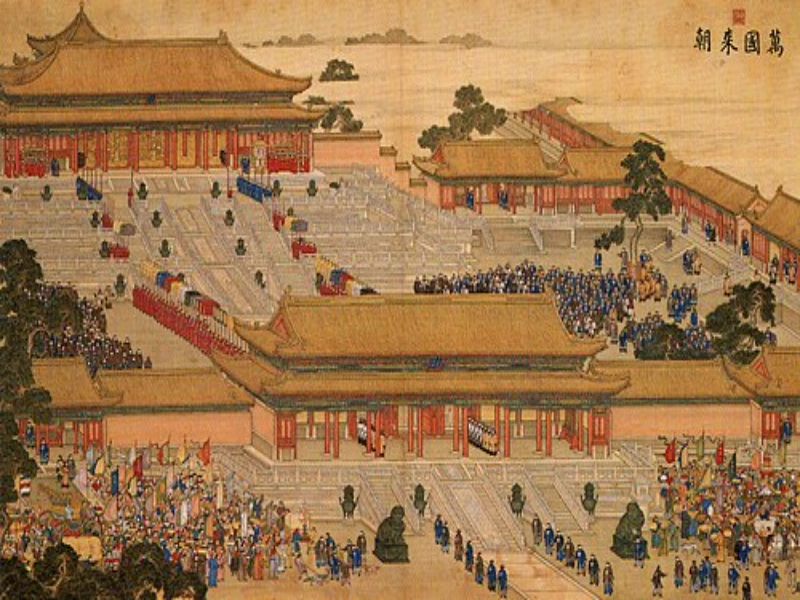
During the Ming and Qing dynasties, ordinary citizens could not freely enter the palace. Instead, access was strictly controlled, and unauthorized entry was forbidden. Behind the walls, therefore, existed an entire hidden world filled with ceremonial halls, royal residences, gardens, kitchens, archives, and government offices.
Meanwhile, the “Purple” in the Chinese name refers to the North Star, which ancient Chinese astronomy associated with the heavenly residence of the emperor. In contrast, the word “City” reflects the enormous scale of the palace itself.
As a result, crossing these gates once meant entering a world that almost nobody outside the imperial court would ever see.
Look closely, and you’ll realize the Forbidden City was designed not simply as a residence, but as a physical symbol of imperial authority.
The History Behind the Red Walls
Construction began in 1406 under the Yongle Emperor of the Ming Dynasty. According to historical records, more than one million workers helped build the palace, transporting precious timber, marble, and stone from across China.
After that, the complex was completed in 1420 after 14 years of construction.
For nearly five centuries, emperors ruled China from this palace. Specifically, coronations, royal weddings, military decisions, and diplomatic ceremonies all unfolded inside these walls.
Later, in 1912, China’s last emperor, Puyi, abdicated and officially brought imperial rule to an end. Interestingly, his unusual life inside the fading palace later inspired the Oscar-winning film The Last Emperor.
Subsequently, the Forbidden City officially became the Palace Museum in 1925. Today, it houses one of the world’s richest collections of Chinese cultural relics, including paintings, jade, ceramics, calligraphy, imperial furniture, and royal archives.
In 2026, moreover, visitors are also paying close attention to newly updated digital exhibitions and restored palace sections, including exhibitions connected to the Palace of Mental Cultivation, which offer a more immersive look into imperial daily life.
Architectural Secrets and Imperial Symbolism
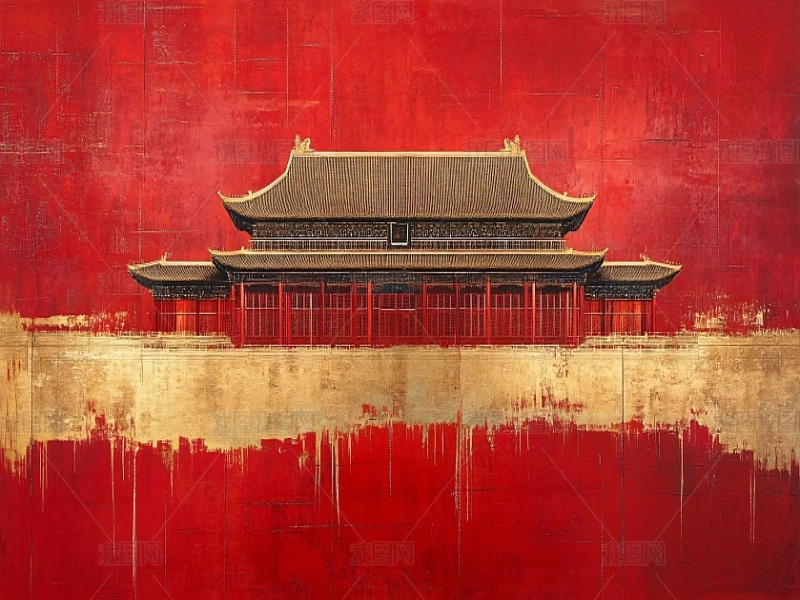
Every structure inside the Forbidden City, therefore, was designed with symbolic meaning.
Yellow Roof Tiles
First of all, yellow represented supreme imperial authority. During imperial times, ordinary citizens could not use yellow roof tiles on their homes.
Red Palace Walls
Meanwhile, red symbolized prosperity, protection, happiness, and political power in traditional Chinese culture.
Dragons Everywhere
As you walk through the palace, you will notice dragons almost everywhere. In imperial China, in fact, the dragon represented the emperor himself.
The Number Nine
In addition, look closely at the palace doors and you’ll notice rows of golden nails arranged in patterns of nine.
Why? Because in the emperor’s world, nine symbolized heavenly power and eternity.
At the same time, one famous legend even claims the Forbidden City contains 9,999.5 rooms because only heaven itself could possess a complete 10,000 rooms.
The Central Axis
Finally, the entire palace follows Beijing’s grand north-south central axis with remarkable symmetry. This layout reflected cosmic order and imperial stability.
Look closely, and you’ll see that every roof tile, staircase, and carving inside the Forbidden City speaks a silent language of hierarchy and power.
Must-See Highlights Inside the Forbidden City
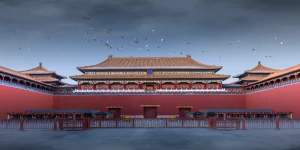
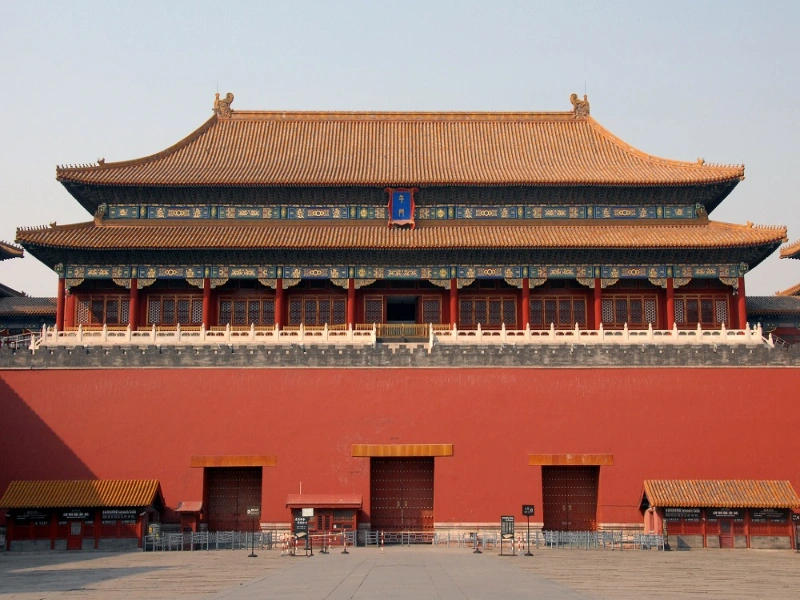
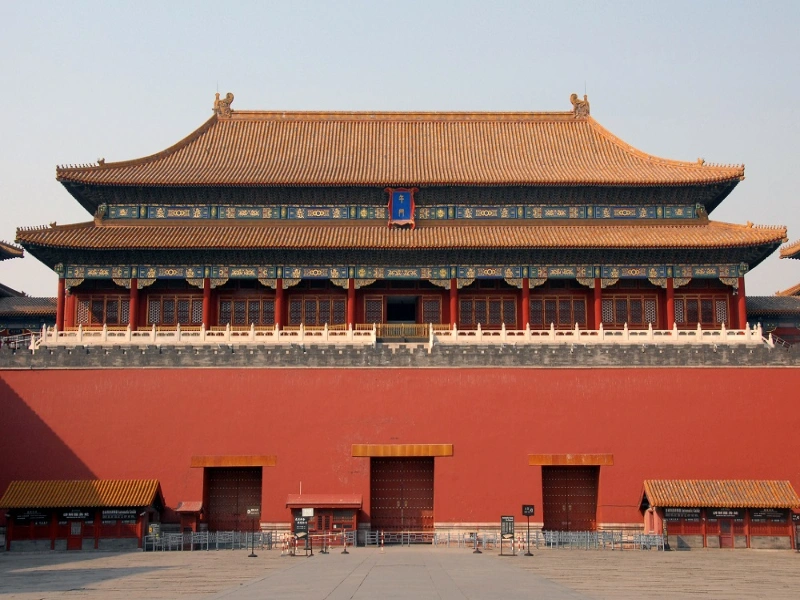
Meridian Gate (午门)
To begin with, this enormous southern gate serves as the main entrance to the palace complex. For first-time visitors, walking through Meridian Gate creates the dramatic feeling of entering imperial China itself.
Hall of Supreme Harmony (太和殿)
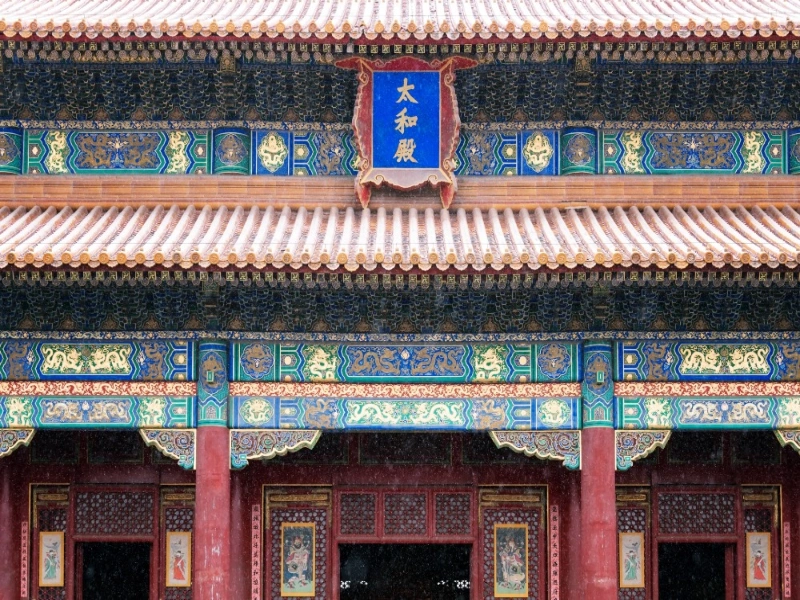
Next, this is the largest and most important hall inside the palace. Emperors once held coronations, royal celebrations, and state ceremonies here.
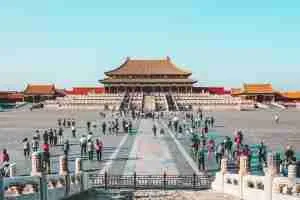
In particular, the giant marble terraces and layered golden rooftops create one of the most iconic views in China.
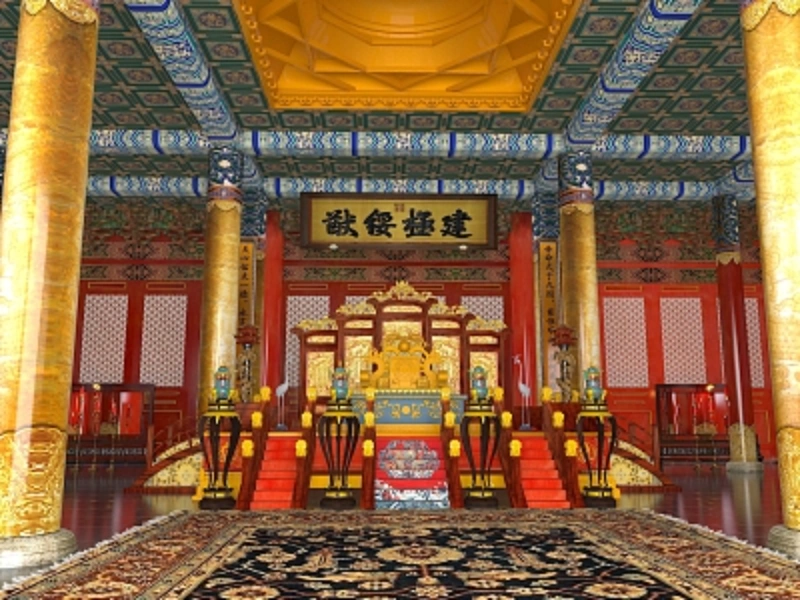
The Dragon Throne
Inside the Hall of Supreme Harmony, meanwhile, sits the emperor’s throne, symbolizing absolute authority.
Hall of Central Harmony & Hall of Preserving Harmony
These neighboring halls, in turn, hosted ceremonial preparation, imperial banquets, and parts of the imperial examination process.
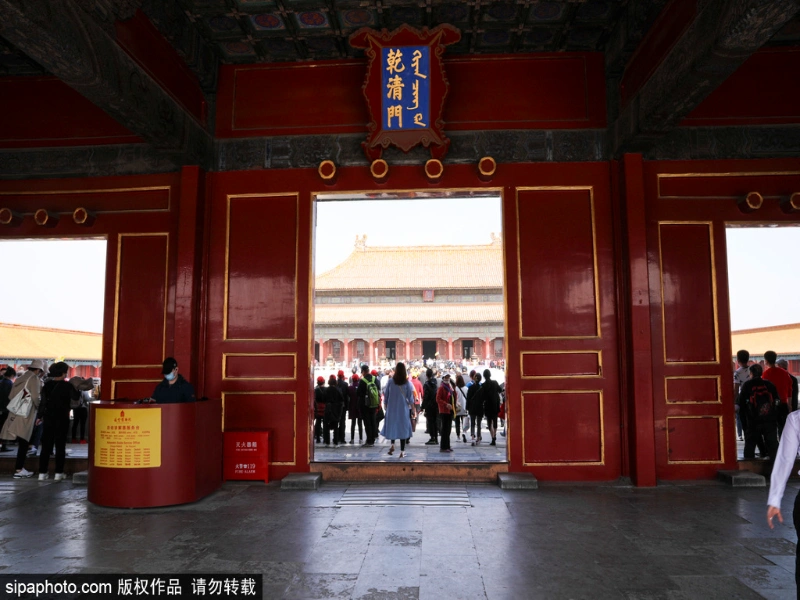
Palace of Heavenly Purity
Originally, this palace once served as the emperor’s residence and administrative center for daily affairs.
Imperial Garden
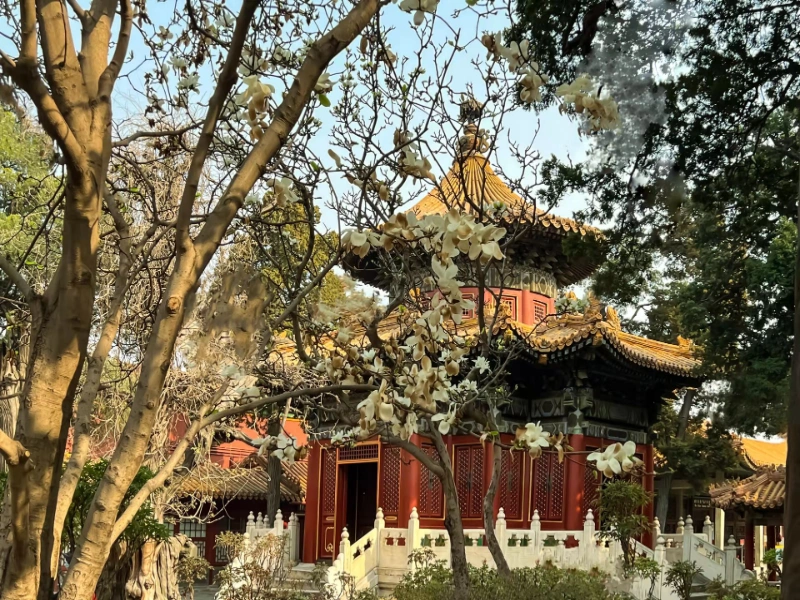
Compared with the vast outer courtyards, however, the Imperial Garden feels intimate and peaceful. Here, ancient trees, decorative rocks, and elegant pavilions create a calmer atmosphere.
Treasure Gallery & Clock Gallery
Although many tourists rush past these specialized exhibitions, they actually contain some of the palace’s most fascinating treasures, including royal jewelry, ceremonial objects, and elaborate European clocks gifted to the imperial court.
As you move beyond the central halls, some of the palace’s most memorable stories begin to appear.
Perfect 4-Hour Forbidden City Itinerary
- 08:30 AM — Enter through Meridian Gate before the largest tour groups arrive
- 09:30 AM — Explore the Hall of Supreme Harmony during the best morning light
- 11:00 AM — Move into the eastern courtyards and Clock Gallery to avoid peak crowds and midday heat
- 12:00 PM — Visit quieter residential palace sections and smaller side courtyards
- 12:30 PM — Finish at the Imperial Garden before exiting through the north gate
- 01:00 PM — Walk to Jingshan Park for panoramic rooftop views
The Hidden Concubine Courtyards: Going Beyond the Central Axis
Most first-time visitors, therefore, stay almost entirely on the central axis. However, the quieter eastern and western palace sections reveal a far more personal side of imperial life.
Smaller residential courtyards once housed concubines, princes, servants, and court officials. At the same time, some areas still carry traces of political intrigue and palace rumors that shaped entire dynasties.
For example, the famous Consort Zhen’s Well remains one of the palace’s most discussed historical sites. According to legend, Consort Zhen was thrown into the well during political turmoil in the late Qing Dynasty.
Compared with the grand ceremonial halls, these quieter side courtyards feel very different. Narrow pathways, faded doorframes, and silent gardens create a more intimate atmosphere.
Our guides often lead guests into these less crowded palace sections because they reveal the human stories hidden behind imperial grandeur.
The Best Route Through the Forbidden City
Most visitors, therefore, explore the palace from south to north.
Recommended Classic Route
- Meridian Gate
- Hall of Supreme Harmony
- Hall of Central Harmony
- Hall of Preserving Harmony
- Palace of Heavenly Purity
- Imperial Garden
- Exit through the Gate of Divine Prowess
This route usually takes around 3–4 hours depending on pace.
However, timing matters just as much as direction.
Between 10:00 AM and 2:00 PM, the central axis becomes both the hottest and most crowded part of the palace. During summer, in particular, the open courtyards can feel extremely exposed beneath the sun.
For this reason, we usually recommend moving east toward the Clock Gallery around midday. It offers indoor exhibitions, air-conditioned spaces, and a quieter atmosphere before continuing north.
Pro Tip: In addition, the eastern and western side courtyards often provide the best photography opportunities because crowds are significantly smaller there.
Capturing the Imperial Aesthetic: Beyond the Red Walls
The Forbidden City remains, overall, one of the most rewarding photography locations in Beijing.
Hall of Supreme Harmony Plaza
To start, the enormous open plaza perfectly captures the scale of imperial architecture.
Eastern Palace Corridors
Meanwhile, these quieter walkways create beautiful symmetry, layered shadows, and calmer compositions.
The Corner Towers
At golden hour, the palace corner towers become especially photogenic. In addition, reflections along the surrounding moat create one of Beijing’s classic postcard scenes.
Jingshan Park Panorama
After exiting the north gate, therefore, walk directly to Jingshan Park.
From here, the Forbidden City transforms into a sea of golden rooftops stretching across Beijing’s historic center. Sunset, in particular, usually offers the most dramatic light for panoramic photography.
Want to photograph the palace without the largest crowds? Our guides know the quietest side alleys, ideal timing windows, and lesser-known viewing angles that most tourists completely miss.
Tickets, Reservations, and Opening Hours
The Palace Museum, therefore, no longer offers reliable same-day ticket purchases. As a result, advance reservation is essential.
Insider Tip for 2026
Note for 2026: Be sure your passport matches your reservation exactly—security check uses facial recognition integrated with your passport data, leaving zero room for error.
Even small spelling mistakes or incorrect passport numbers may prevent entry at the gate.
Opening Hours
- April–October: 8:30 AM – 5:00 PM
- November–March: 8:30 AM – 4:30 PM
- Closed Mondays except some public holidays
Ticket Prices
- High Season: CNY 60
- Low Season: CNY 40
- Treasure Gallery: CNY 10
- Clock Gallery: CNY 10
Official Website:
The Palace Museum Official Website
Finally, be prepared for long walking distances and large open courtyards with very limited shade.
Best Time to Visit
Spring and autumn, therefore, usually provide the most comfortable conditions for exploring Beijing.
Spring (April–May)
During this time, flowers bloom throughout the palace gardens, while temperatures remain pleasant.
Autumn (September–November)
Meanwhile, clear skies and soft golden light create excellent photography conditions.
Winter
Interestingly, winter visits feel surprisingly atmospheric. Crowds become smaller, and occasional snowfall transforms the palace into a quiet imperial landscape.
Best Time of Day
Overall, arriving early in the morning almost always provides the best experience before major tour groups arrive.
How to Get There
By Subway
To begin with, take Line 1 to Tiananmen East or Tiananmen West Station, then walk north toward Meridian Gate.
By Private Transfer
Meanwhile, many international travelers prefer private transportation, especially when combining the Forbidden City with other Beijing landmarks in one day.
Important Tip
Finally, visitors enter from the south and exit from the north. Therefore, planning your transportation beforehand helps avoid unnecessary walking afterward.
Nearby Attractions Worth Combining
The Forbidden City pairs naturally with several nearby attractions:
- Tiananmen Square
- Jingshan Park
- Beihai Park
- Wangfujing
Many travelers also finish the day with authentic Peking Duck at a traditional Beijing restaurant.
Frequently Asked Questions
Absolutely. It remains one of China’s most important cultural and historical landmarks.
Most visitors spend around 3–4 hours exploring the palace complex.
Yes. International visitors can reserve tickets using passport information.
Yes. The scale, architecture, and palace stories often make the experience surprisingly engaging for families.
Visitors enter through Meridian Gate in the south and exit from the north gate. Explore the Forbidden City with GoChinaNow At GoChinaNow, we believe the Forbidden City should be experienced through storytelling, pacing, and cultural insight—not simply rushed through as a checklist attraction. Our private Beijing experiences combine licensed English-speaking guides, flexible itineraries, and insider knowledge that help travelers discover both the grandeur and the hidden human stories behind China’s imperial palace. Check our available dates for a Private Forbidden City Tour and experience Beijing’s most iconic landmark through the eyes of a local expert.
Travel With Go China Now
All of our tours can be adjusted or customized based on your requirements, with a private guide and a private driver to suit your needs. Reach out to us to create your dream trip, and our professional travel consultant will provide in-depth experience options and a worry-free itinerary.
Start Planning Your Trip