














Quick Answer
Wudang Tai Chi: Discover the Ancient Rhythm of China’s Sacred Mountain
High in the mist-covered mountains of central China, mornings in Wudang begin slowly. Temple bells echo through the valleys, while thin clouds drift between ancient Taoist rooftops. On quiet stone platforms overlooking the cliffs, Tai Chi masters move in silence. They turn, breathe, and flow with the mountain itself.
For many international travelers, this becomes their first real encounter with Tai Chi.
Not the version often seen in parks or movies, but the original spirit of Tai Chi deeply connected to Taoist philosophy, nature, and inner balance. At Wudang Mountain, Tai Chi is not simply a martial art. Instead, it is part of daily life, wellness culture, and the rhythm of the mountain itself.
That is exactly why Wudang has become one of China’s most fascinating cultural destinations for travelers seeking something slower and more meaningful. In fact, many visitors arrive expecting a sightseeing trip, yet leave feeling refreshed both mentally and physically.
One mountain hides ancient wisdom. One movement reveals a philosophy of life.
Wudang Mountain: The Spiritual Home of Tai Chi
Known as one of China’s most sacred Taoist mountains, Wudang Mountain has long been linked with meditation, internal martial arts, and traditional Chinese wellness culture.
Unlike fast and aggressive fighting styles, Wudang Tai Chi focuses on softness, balance, breathing, and controlled movement. More importantly, its philosophy comes from ancient Taoist ideas such as yin and yang, harmony between humans and nature, and “using softness to overcome force.”
Because of this, Tai Chi often feels calming even for first-time visitors.
Many travelers expect martial arts to look intense. However, watching Tai Chi in Wudang feels more like watching flowing water or drifting clouds. Every motion connects naturally into the next. Meanwhile, every breath follows the rhythm of the body.
Look closely, and you’ll notice that Tai Chi is not really about fighting at all — it is about balance.

Classic Tai Chi Movements Travelers Love to Learn
One reason Tai Chi fascinates international visitors is because the movements feel both graceful and cinematic.
Even travelers with zero martial arts experience often recognize certain classic movements after only one lesson. As a result, beginners usually feel relaxed instead of intimidated.
Some of the most famous Tai Chi forms include:
- “White Crane Spreads Its Wings” — a light movement inspired by the posture of a crane
- “Brush Knee and Twist Step” — one of the most foundational flowing movements in Tai Chi
- “Golden Rooster Stands on One Leg” — a balance-focused posture popular for travel photos
- “Cloud Hands” — slow circular hand motions that feel especially meditative
- “Repulse the Monkey” — a backward stepping movement combining softness and control
For overseas visitors, these names immediately make Tai Chi feel more visual and approachable. At the same time, they help transform an unfamiliar martial art into something easier to enjoy.
In 2026, Tai Chi is increasingly described as a form of “moving meditation.” Many people now see it as an antidote to digital burnout, nonstop notifications, and stressful city life.
Many guests tell us the hardest part is not learning the movements. Instead, it is learning how to slow down mentally enough to follow the rhythm.
Modern Tai Chi Masters and Global Cultural Influence
Today, Tai Chi has spread far beyond China. From New York and Paris to Kuala Lumpur and Sydney, millions of people practice Tai Chi for wellness, mindfulness, and fitness.
Behind this global popularity are generations of modern Tai Chi masters and cultural ambassadors. For decades, they have preserved and promoted traditional Chinese martial arts around the world.

Some specialize in Chen-style Tai Chi, known for explosive power and deep stances. Others focus on Yang-style Tai Chi, famous for its smooth and beginner-friendly rhythm. Meanwhile, Wudang Tai Chi masters are especially popular among international travelers. They combine martial arts with Taoist wellness philosophy, meditation, and mountain culture.
Step into any temple courtyard today, and you’ll quickly notice that Tai Chi has shed its old image as exercise only for the elderly. Instead, it has become a global language of mindfulness, balance, and healthy living.
In many ways, modern Tai Chi masters have transformed an ancient martial art into one of China’s most recognizable cultural experiences.
The Healing Rhythm of Tai Chi Travel
For many visitors, the biggest surprise is how therapeutic the experience feels.
After days of busy sightseeing in cities like Beijing or Shanghai, Wudang offers a completely different atmosphere. The pace slows down. The mountain air feels cooler. Even the soundscape changes from traffic to birds, wind, and temple bells.
As a result, even a simple 20-minute Tai Chi session can feel deeply restorative.
Many travelers also appreciate that Tai Chi has almost no entry barrier. You do not need athletic experience, flexibility, or martial arts training to participate. In fact, children, seniors, solo travelers, and couples can all enjoy beginner-friendly classes.

Travel Tip: Early morning is the best time for Tai Chi practice in Wudang. The mountain is quieter, temperatures are cooler, and the sunrise mist creates an incredible atmosphere for photos and videos.
Meanwhile, some guests choose to wear traditional Tai Chi uniforms during their experience. Against Wudang’s ancient temples and mountain scenery, the photos often look cinematic without trying too hard.
Immersive Tai Chi Experiences in Wudang Mountain
Today, Wudang has evolved far beyond a traditional sightseeing destination. Instead, it has become one of China’s leading wellness and cultural travel experiences.
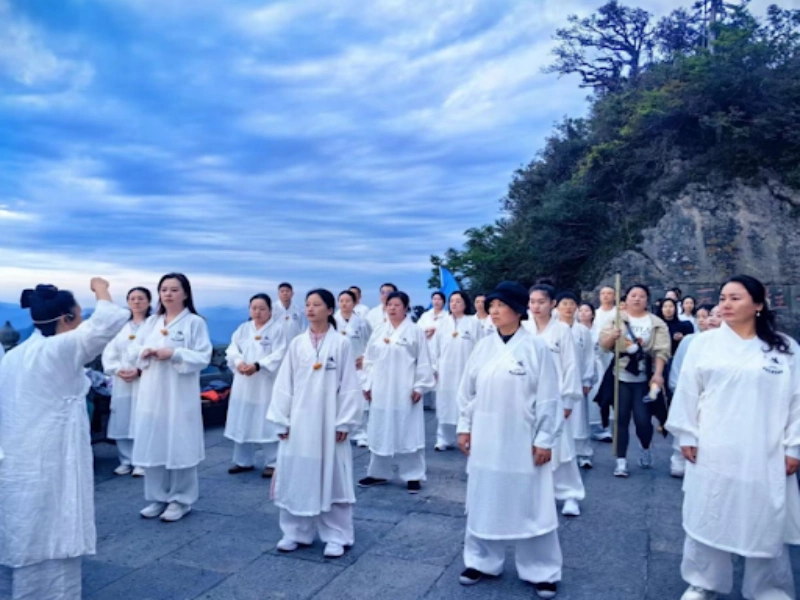
Some of the most popular activities include:
Mountain Sunrise Tai Chi Sessions
Practicing Tai Chi above the clouds while the sun rises over the mountains is easily one of the most unforgettable experiences in Wudang.
Taoist Temple Performances
Professional martial arts demonstrations combine sword techniques, Tai Chi forms, and Taoist ritual elements. Consequently, even travelers with no martial arts background often find the performances fascinating.
Beginner-Friendly Tai Chi Classes
Many travel programs include short introductory sessions lasting around 15–30 minutes. This allows visitors to learn basic movements in a relaxed environment.
Wudang Travel Photography
The combination of flowing Tai Chi robes, ancient courtyards, mountain fog, and Taoist architecture has made Wudang increasingly popular among photographers and social media travelers.
Insider Tip: Stay inside a heritage-style mountain academy or Taoist-inspired retreat whenever possible. That way, you can wake up to the sound of ancient bells and morning mist instead of traffic and crowds in the city below the mountain.
Photography Tip: For the best panoramic mountain shots, bring a lightweight zoom lens and head toward the Golden Summit just before sunset. At that hour, warm light hits the bronze temple roofs and drifting clouds, creating one of Wudang’s most cinematic views.
Pro Tip: Lightweight white or black clothing photographs especially well against Wudang’s stone architecture and green mountain scenery.
Download our 3-Day Wudang Wellness Itinerary or consult our travel expert for a private Tai Chi and martial arts journey through Wudang Mountain.
Planning Your Journey to the Purple Heaven
Although Wudang Mountain feels peaceful and remote, reaching it has become much easier in recent years.
Most visitors arrive via:
- Wudangshan Railway Station (武当山站)
- Shiyan Wudangshan Airport (十堰武当山机场)
In addition, high-speed rail connections from Wuhan and Xi’an are very convenient for travelers exploring central China.
For overseas guests unfamiliar with local transportation systems, private transfers often make the journey smoother. Many travelers therefore choose direct private car services from Wuhan, Xi’an, or Shiyan. This helps avoid language barriers and complicated mountain-area logistics.
At GoChinaNow, we provide flexible transportation support, including airport pickup, railway station transfers, and customized Wudang wellness itineraries.
Eventually, the journey itself becomes part of the experience. Modern cities slowly give way to mountain landscapes, Taoist temples, and the slower rhythm of Wudang life.
Best Time to Visit Wudang Mountain
Wudang can be visited year-round, although each season creates a different atmosphere.

Spring (April–May): Best for Taoist festivals, fresh mountain air, and blooming greenery across the trails.
Autumn (October–November): Peak photography season with golden ginkgo trees, clear skies, and cooler temperatures ideal for hiking and Tai Chi practice.
Winter: The quietest season of all. Snow-covered temples, misty peaks, and silent courtyards create dramatic scenery that many travelers compare to classic martial arts films like The Last Samurai.
Meanwhile, summer offers lush mountain landscapes and dramatic cloud formations, although visitor numbers are usually higher.
Tai Chi as a Gateway to Understanding China
The deeper travelers explore Tai Chi, the more they begin to understand why it holds such an important place in Chinese culture.
Tai Chi reflects ideas found throughout Chinese philosophy, medicine, architecture, and daily life: balance, patience, restraint, harmony, and awareness of nature.
That is why many travelers leave Wudang remembering not only the movements, but also the feeling.
The silence of the mountain.
The rhythm of breathing.
The calmness that comes from slowing down.
Ultimately, Tai Chi is not simply something you watch. In Wudang, it becomes something you experience personally.
One yin and one yang create the Tao. One movement and one breath reveal a different way of seeing the world.
Experience Wudang Tai Chi with GoChinaNow
At GoChinaNow, we believe Wudang Mountain is best experienced slowly — through movement, culture, mountain landscapes, and meaningful local encounters.
Our Wudang experiences combine Tai Chi practice, Taoist culture, scenic exploration, and immersive travel moments designed especially for international visitors.
Whether you are interested in wellness travel, cultural experiences, photography, or simply escaping the noise of modern cities for a few days, Wudang offers one of China’s most unique and memorable journeys.
Travel with GoChinaNow and discover the timeless rhythm of Tai Chi in the mountains where it still lives today.
Travel With Go China Now
All of our tours can be adjusted or customized based on your requirements, with a private guide and a private driver to suit your needs. Reach out to us to create your dream trip, and our professional travel consultant will provide in-depth experience options and a worry-free itinerary.
Start Planning Your Trip